
Day Trips from Volcano
Day Trips from Volcano
Volcano’s location puts you in proximity to some of the most beautiful and adventurous locations the Big Island has to offer.
Here’s what’s within reach when staying with us.

One-Way Drive Time: 40 minutes
You can easily spend a full day exploring Hilo, the waterfalls, and beaches, or plan a half-day to briefly explore the downtown on your way to another spot.
WHAT TO SEE
Downtown Hilo
Historic buildings, local shops, cafes, bookstores. Walk along Banyan Drive with its massive banyan trees. It’s authentic and unpretentious Hawaii.
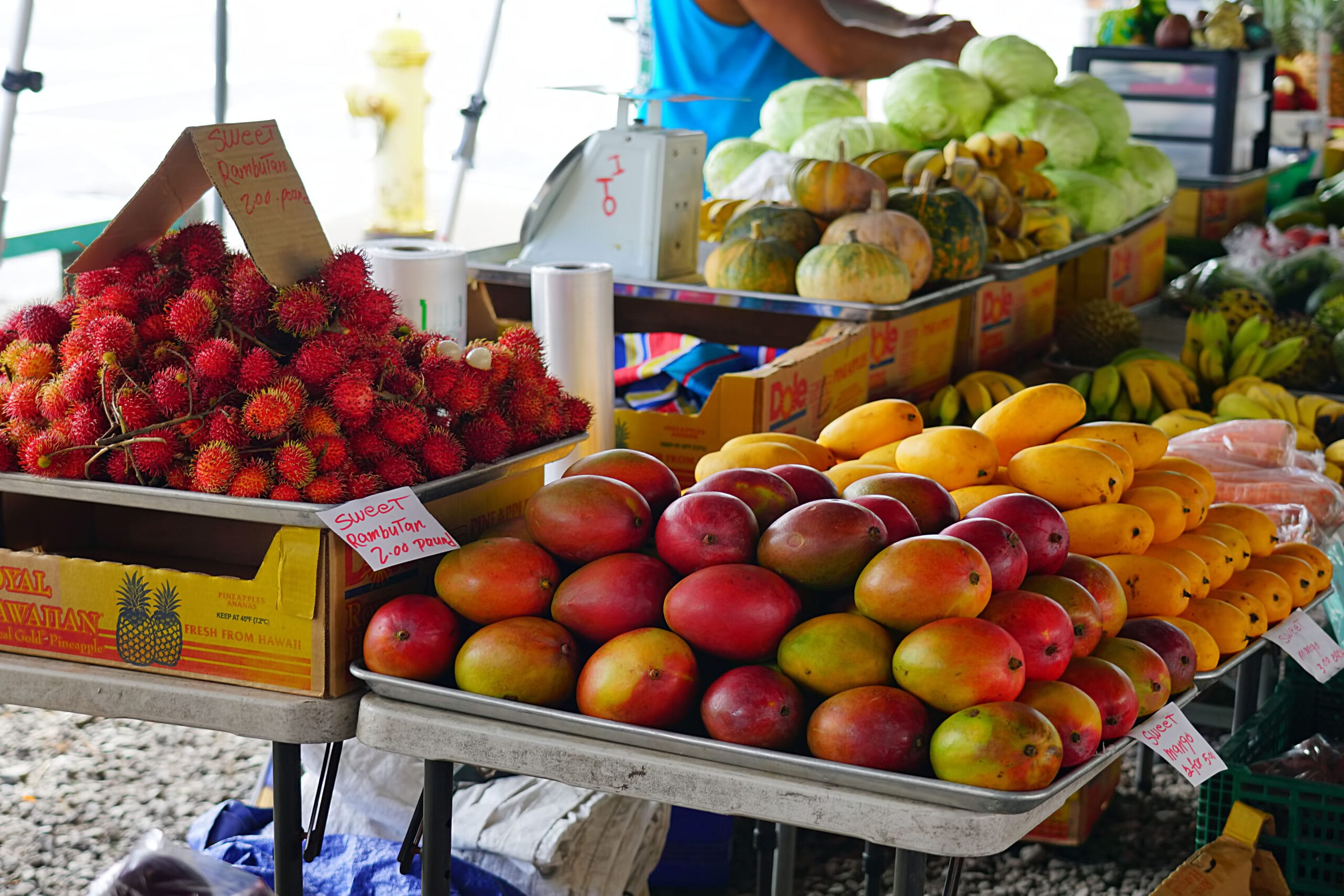
Hilo Farmers Market
Wednesday and Saturday are the big days. Arrive early (7-8am) for the best selection of tropical fruit (rambutan, dragon fruit, apple bananas), flowers, prepared food, hot malasadas, handmade crafts, and local honey.
Waterfalls
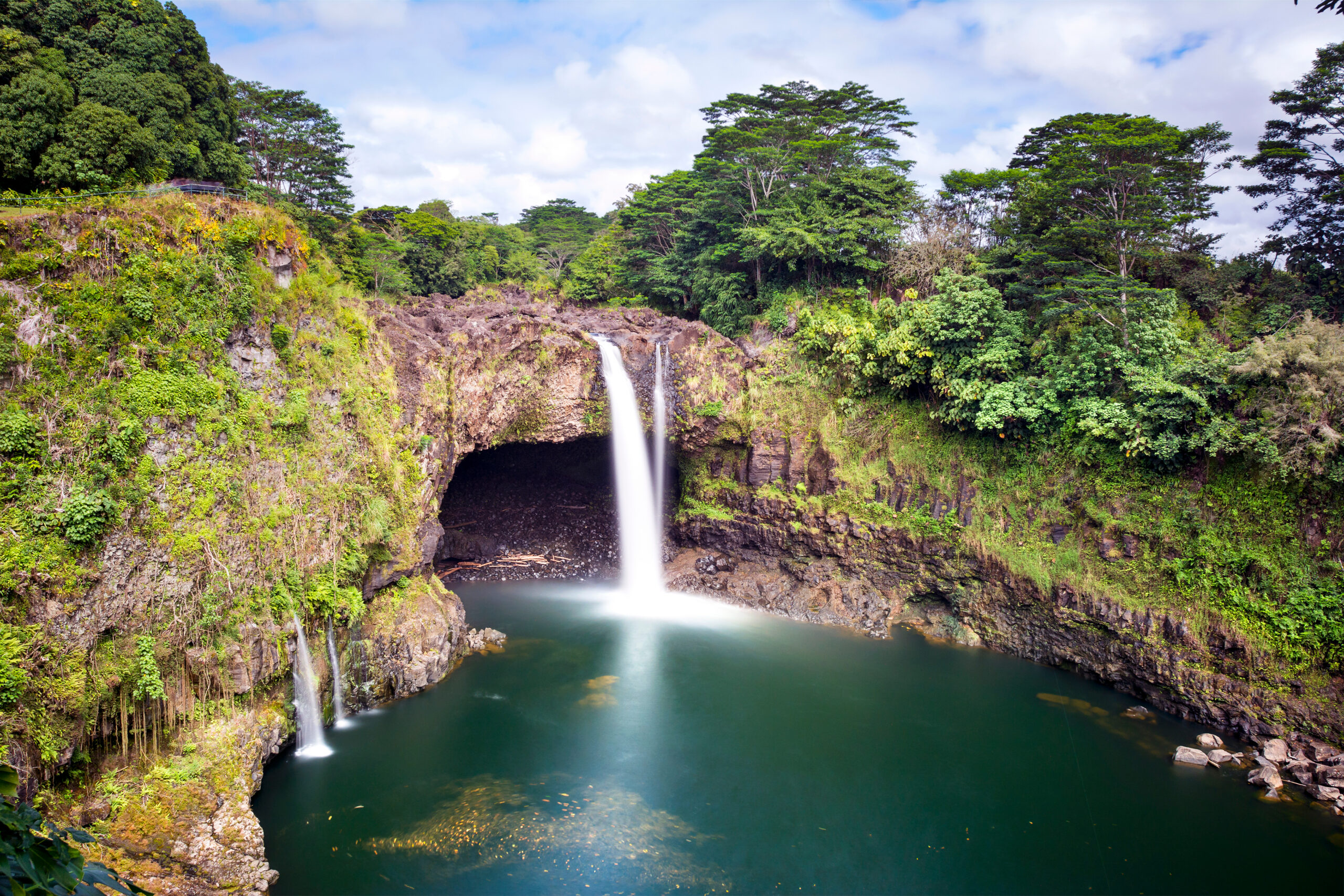
Rainbow Falls is right in town—quick stop with morning rainbows in the mist. Just upstream, Boiling Pots (Peʻepeʻe Falls) features terraced pools and cascades on the Wailuku River—beautiful views from the overlook (swimming is dangerous and prohibited). Akaka Falls (20 minutes north) is a 442-foot cascade reached by an easy loop trail through bamboo forest and tropical plants.
Beaches
While not necessarily famous for its beaches, Hilo does have a handful of beach parks. Richardson Ocean Park has black sand, protected swimming, tide pools, and often sea turtles. Carlsmith Beach Park (one of our favorites!) offers calm lagoons perfect for snorkeling. Onekahakaha Beach Park has a protected shallow area.
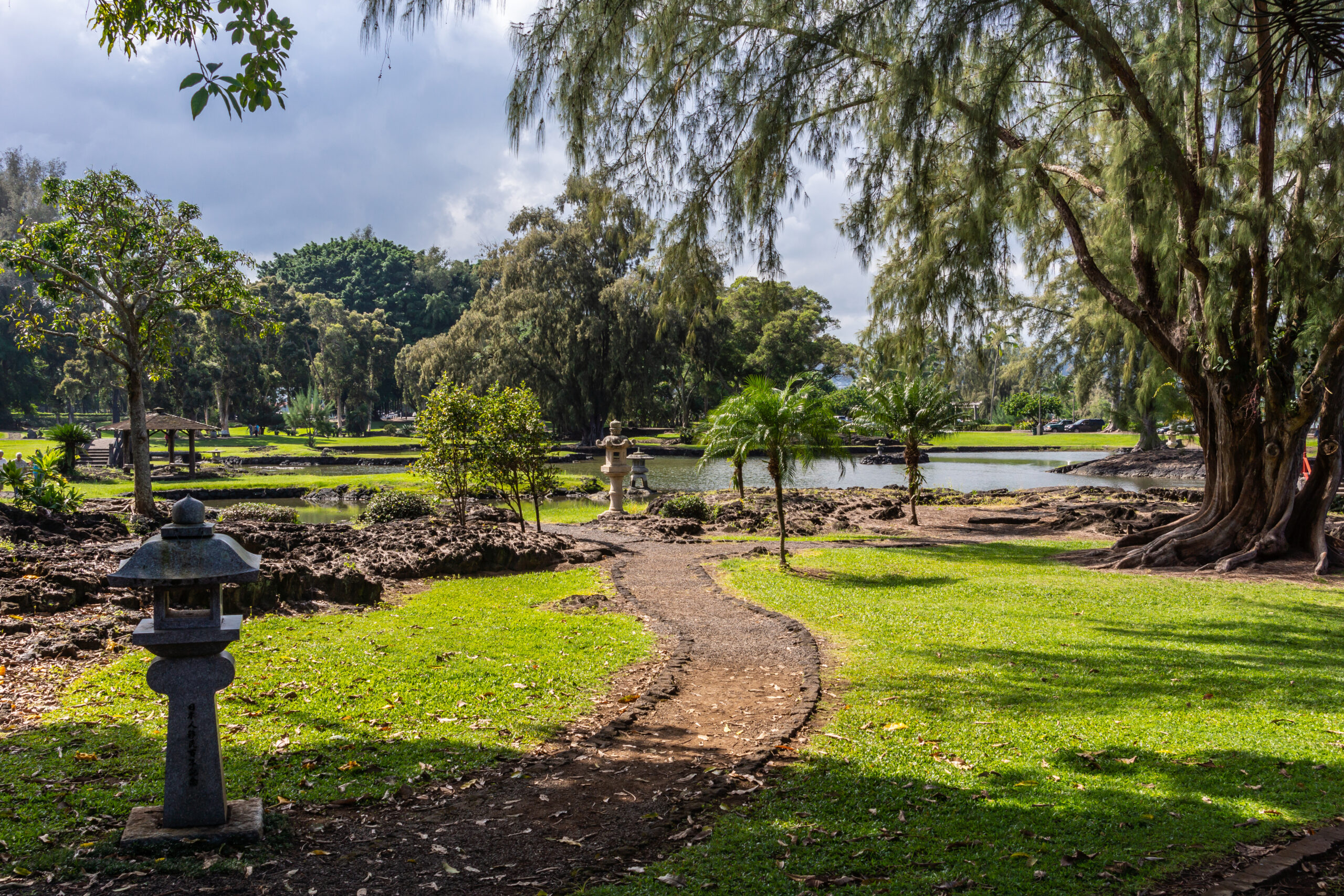
Liliʻuokalani Gardens
Peaceful Japanese-style gardens on the bay—beautiful for a stroll, especially at sunrise or sunset.
Museums
Visit the Pacific Tsunami Museum for powerful firsthand accounts and exhibits about the devastating 1946 and 1960 tsunamis that shaped Hilo’s history The ʻImiloa Astronomy Center for interactive exhibits connecting Hawaiian culture and astronomy, planetarium shows.
WHERE TO EAT
Hilo has excellent local spots—poke bowls, saimin, plate lunch, and mom-and-pop cafes.
The downtown strip has some favorites including
- Puka Puka Kitchen (plate lunch) and
- Nector Cafe (desserts)
We also like to go off the beaten path to
- Sweet Cane Cafe (vegetarian, locally sourced),
- Kitchen Umeko (sushi), and
- H&K lunch shop (plate lunch, spam musubi).
For a nicer dinner out, try one of these – be sure to make a reservation!
- Moon and Turtle or
- Izakaya Miyo
One-Way Drive Time: 2 hours (not including stops)
Highway 19 hugs the coast with glimpses of ocean, gulches spanned by historic bridges, roadside fruit stands, and that impossibly green landscape that defines this coast. Stop at scenic pullouts—many have unmarked waterfalls visible from the road.
Full day recommended. You can drive straight through to the Waipiʻo Valley lookout in 2 hours, but you’ll want to stop frequently. Plan 5-7 hours to really explore Akaka Falls, Waipiʻo Valley, Honoka’a, and make roadside stops. Combine with Hilo if you’re ambitious, or dedicate the full day to this coast. You can also plan to visit these sites on your way to Kona if that is where you’re headed after your departure from Volcano.
WHAT TO SEE
Pepeʻekeo Scenic Drive:
4-mile loop off Highway 19 through dense jungle canopy—narrow, winding, incredibly lush. Take it slow.
Hawaii Tropical Bioreserve & Garden
Scenic nature preserve with trails through valleys, streams, and over 2,000 tropical plant species.
Umauma Falls
Triple-tier waterfall viewable from the road or via zipline tours and botanical garden on private property.
Akaka Falls State Park
The star attraction—442-foot Akaka Falls plus 100-foot Kahuna Falls on an easy 0.4-mile paved loop through bamboo groves, massive ferns, and jungle vegetation. ($10 per vehicle or $5 walk-in)
Kolekole Beach Park
Small black sand beach at the mouth of Kolekole Stream, under a highway bridge. Local swimming spot with a waterfall backdrop—atmospheric and off the beaten path.
Laupāhoehoe Point:
Dramatic lava rock peninsula jutting into the ocean. Memorial to the 1946 tsunami victims. Powerful waves, incredible coastal views.
Honoka’a:
Charming plantation town with local character. Browse Honoka’a Trading Company (vintage finds), grab malasadas at Tex Drive-In, visit small shops and cafes on Mamane Street.
Waipiʻo Valley Lookout
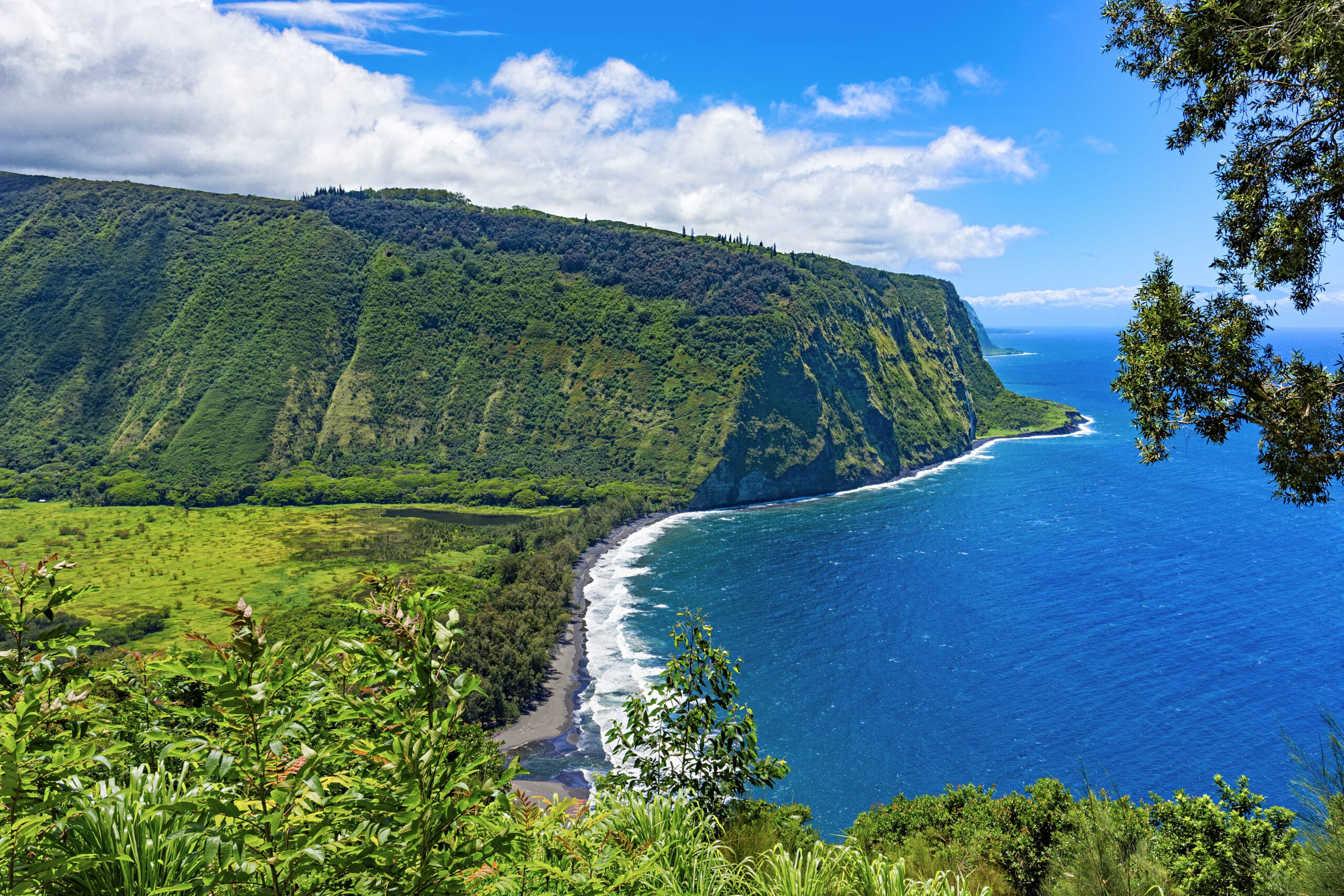
The iconic view—a mile-wide valley with 2,000-foot cliffs, taro patches, black sand beach, and waterfalls. One of the most photographed spots on the island. The lookout is free and accessible. Hiking down is extremely steep (25% grade) and you must hike back up. Or book a 4WD tour to explore the valley floor.
WHERE TO EAT
Tex Drive-In in Honoka’a for malasadas and local plate lunch, and What’s Shakin’ (near Pepe’ekeo) for smoothies made with fruit from their farm.
It’s a long day, so it might be a good idea to stop in Hilo to pick up snacks or lunch for the drive!
One-Way Drive Time: 90 minutes (not including stops)
Remote, windswept, dramatic. Kaʻu is the Big Island’s least developed district—vast, open landscapes, powerful coastlines, and some of the world’s finest coffee growing on volcanic slopes. This is Hawaii without crowds.
Plan for a full day if you’re going to South Point and Green Sand Beach (8-10 hours total with driving and hiking).
Full day recommended. You can drive straight through to the Waipiʻo Valley lookout in 2 hours, but you’ll want to stop frequently. Plan 5-7 hours to really explore Akaka Falls, Waipiʻo Valley, Honoka’a, and make roadside stops. Combine with Hilo if you’re ambitious, or dedicate the full day to this coast. You can also plan to visit these sites on your way to Kona if that is where you’re headed after your departure from Volcano.
Practical tips: Gas up before you go—services are sparse. Bring food and lots of water. Cell service is spotty. The drive from Volcano to South Point via Highway 11 is scenic but long. Factor in time for slow, winding roads and stops.
WHAT TO SEE
Punalu’u Black Sand Beach:
The island’s most famous and accessible black sand beach. Sea turtles (honu) frequently bask on the shore. Good for photos and turtle watching, less ideal for swimming due to strong currents and rocky bottom. Shaded picnic areas, facilities, freshwater pond nearby. Can get crowded midday with tour buses.
South Point (Ka Lae)
The southernmost point in the United States. Dramatic sea cliffs, relentless wind, and ancient Hawaiian fishing shrines. The drive down South Point Road is desolate and beautiful—12 miles through open grassland with wind farms.
Green Sand Beach (Papakōlea)
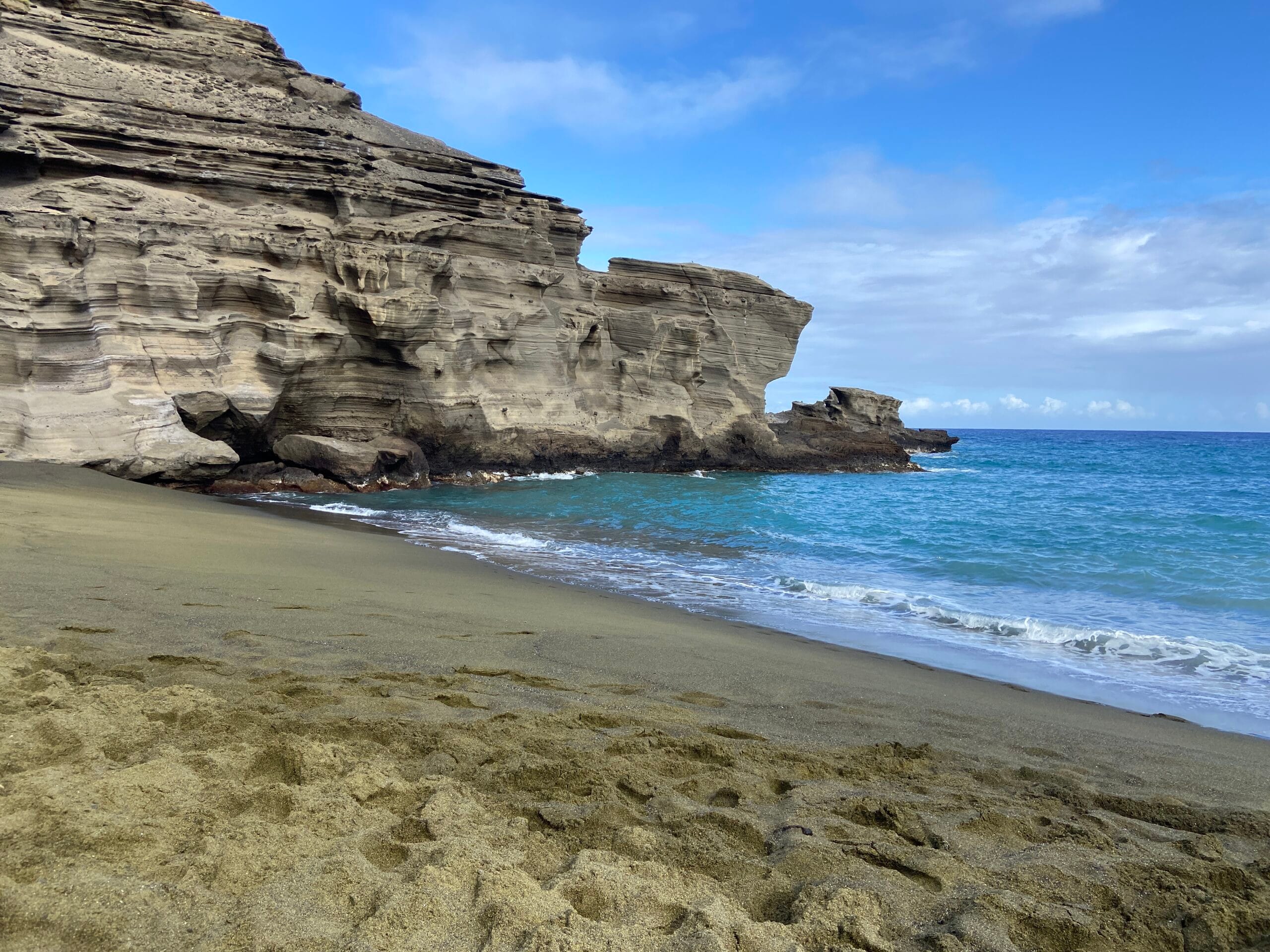
One of only four green sand beaches in the world, colored by olivine crystals eroded from a volcanic cinder cone. Getting there requires a 5-mile round-trip hike (locals will offer to take you in pickup trucks, but it’s not recommended – not only is it illegal for these trucks to operate, but they contribute to erosion of the ecosystem). The hike is moderately challenging—flat but exposed, hot, windy, with no shade. Bring lots of water, sun protection, and sturdy shoes. The beach itself is stunning—a protected cove with emerald-tinted sand. Swimming is possible but currents can be strong. Worth the effort if you’re up for the adventure.
Kaʻu Coffee Farms
Kaʻu coffee has won more awards than Kona in recent years—sweet, smooth, complex flavors from high-elevation volcanic soil. Several farms offer free tastings and tours: Kaʻu Coffee Mill, Rusty’s Hawaiian, Mountain Thunder. Learn about the growing process, meet the farmers, buy beans directly from the source. The scenic drive through coffee country on slopes of Mauna Loa is beautiful.
Nāʻālehu
The southernmost town in the US. Small, quiet, with local character. Stop at Punalu’u Bake Shop for sweetbread and malasadas (famous tourist stop but legitimately good), Hana Hou Restaurant for plate lunch, or browse the few small shops.
One-Way Drive Time: 2 hours to the visitor center
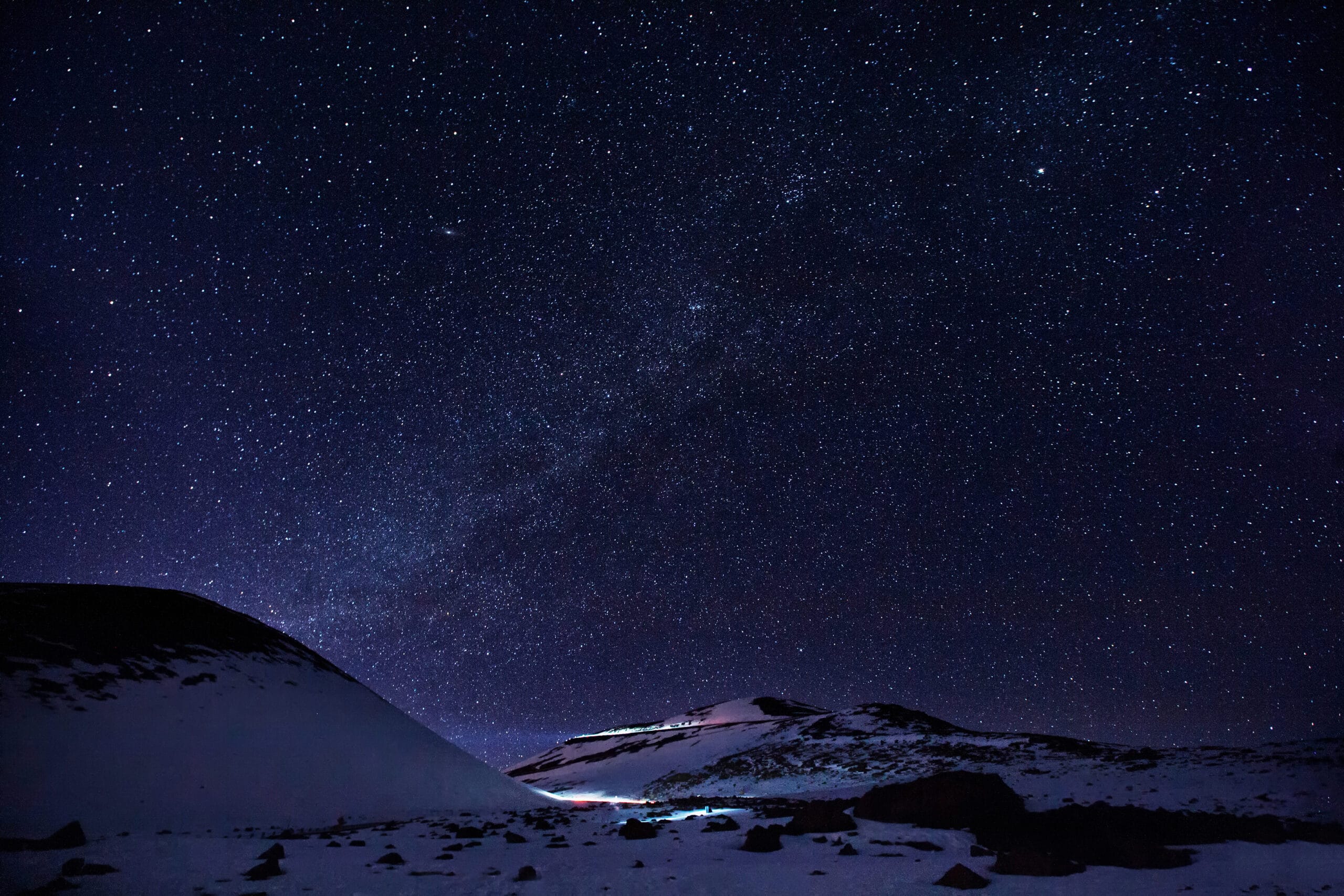
Mauna Kea offers the best stargazing in the world and otherworldly landscapes above the clouds.
Mauna Kea Observatory visitor center at 10,000 ft is accessed via the Saddle Road. The visitor center has restrooms, a gift shop, and usually a couple telescopes you can look through.
You can continue on to the Mauna Kea summit (nearly 14,000 feet) only if you have a 4×4 vehicle. If you do plan to visit the summit, take the time to familiarize yourself with how to visit safely and responsibly: https://hilo.hawaii.edu/maunakea/visitor-information/public-safety
VISITING THE INFORMATION CENTER
The visitor center has restrooms, a gift shop, and usually a couple telescopes you can look through.
You can still stargaze here – rangers will set up telescopes
VISITING THE SUMMIT
Due to the complexity of visiting, we highly recommend booking a tour if you plan to visit the summit or stargazing such as the highly rated Hawaii Forest and Trail tour or Mauna Kea Summit sunset and stargazing tours.
Know In Advance
- 4×4 vehicle required beyond the Visitor Information Station at 9,200 feet. Check with your rental car company to see if they allow driving their car to the summit.
- Acclimatize at the VIS for 30+ minutes before ascending, and plan to bring lots of water due to dry summit air
- Not recommended for people with heart/lung issues, pregnant women, or children under 16
- Bring very warm clothing—it can be below freezing at the summit
- Make sure you have a full tank of gas—there are no services on the mountain
One-Way Drive Time: 2 hours
One-Way Drive Time: 45 minutes to Hilo heliport
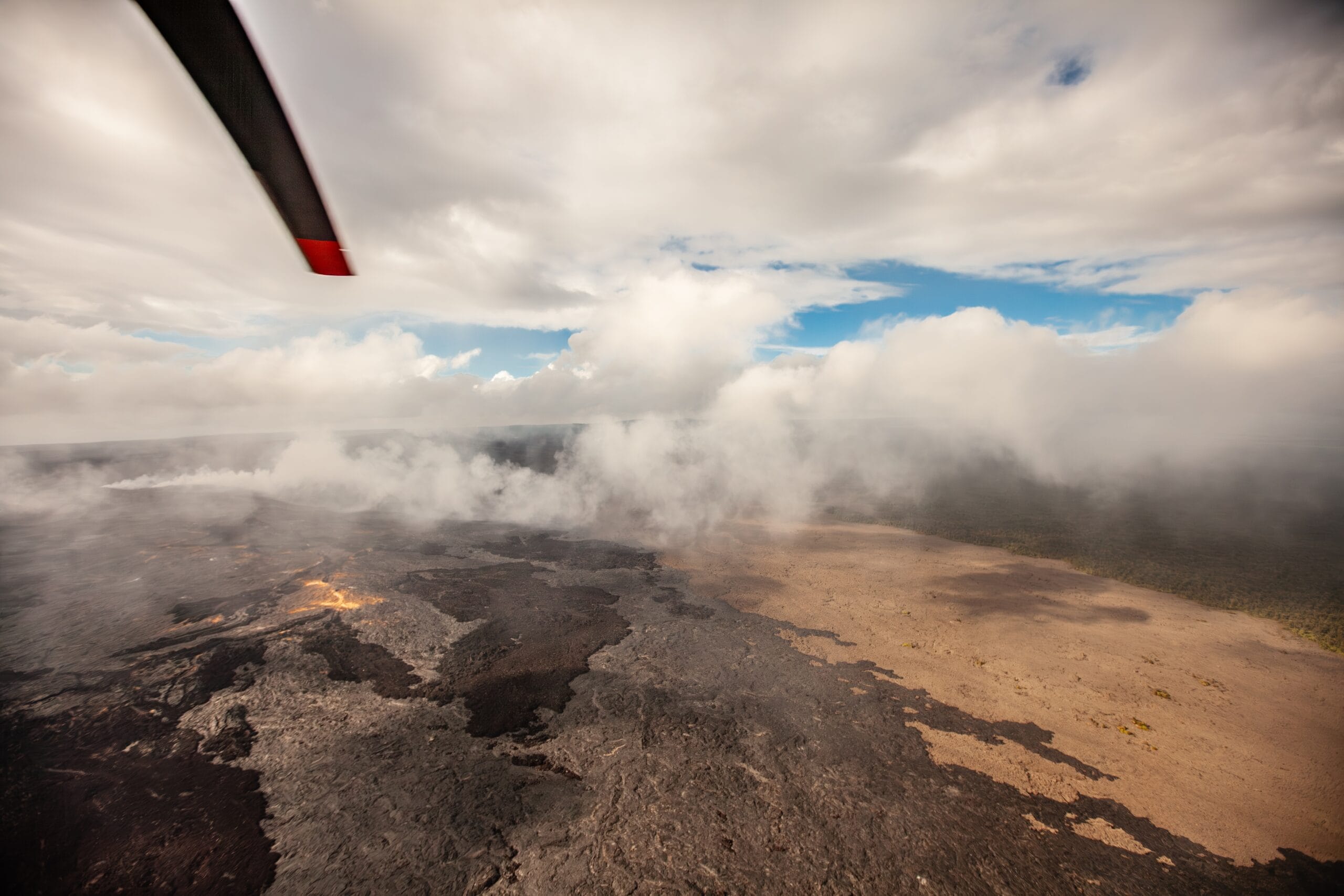
For a truly unforgettable perspective on the Big Island’s dramatic landscapes, helicopter tours offer views you simply can’t get from the ground—especially of the volcano, remote waterfalls, and inaccessible valleys.
Major operators:
- Blue Hawaiian Helicopters: Based at Hilo airport, professional operation, multiple tour options
- Paradise Helicopters: Hilo and Kona departures, doors-on and doors-off options
- Sunshine Helicopters: Known for good narration and experienced pilots
WHAT YOU'LL SEE
Most tours departing from Hilo focus on the volcano (active lava flows if erupting, Halemaʻumaʻu crater, lava fields), Waipiʻo Valley from above, coastal waterfalls cascading down cliffs, and rainforest canopy. Longer tours may include Mauna Kea, Kohala valleys, or circle-island routes. The volcano-focused tours are particularly spectacular during active eruptions—seeing lava fountains and flows from the air is extraordinary.
PRACTICAL CONSIDERATIONS
- Tours range from 45 minutes to 2+ hours
- Prices typically $200-$500+ per person depending on length and route
- Morning flights often have better weather and visibility
- Weight restrictions apply (usually disclosed at booking)
- Weather cancellations happen—tours won’t fly in poor visibility